Boosted My Reaction Speed in Just 14 Days: The App That Trained My Brain Like a Reflex
Have you ever missed a crucial moment because you were just too slow to respond? I did—until I found a simple app that changed everything. No flashy promises, no complex drills—just daily five-minute exercises that quietly sharpened my focus and reflexes. Within days, I was reacting faster in conversations, making quicker decisions, and even catching dropped objects before they hit the floor. This isn’t about gaming or high-pressure jobs—it’s about feeling more present, aware, and in control of everyday life. It started with one frustrating morning when I completely blanked during a Zoom call. My boss asked a question, and I just... froze. Not because I didn’t know the answer, but because my brain felt like it was moving through syrup. That moment stuck with me. I wasn’t just tired—I was out of sync. And I knew something had to change.
The Moment I Realized I Was Too Slow
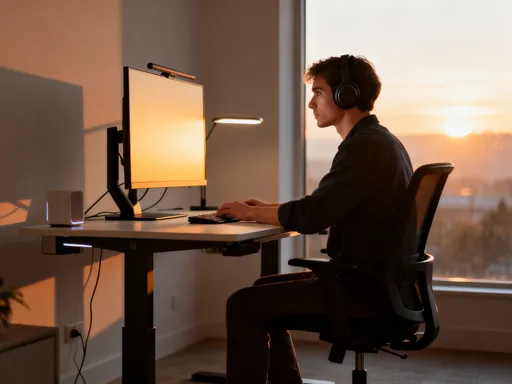
It happened during a team meeting, the kind where everyone’s camera is on, and the pressure to appear sharp is real. My manager asked a follow-up question—something simple about project timelines—and I watched my colleagues respond smoothly while my thoughts scrambled to catch up. There was a pause. Then another. And finally, I mumbled something that sounded nothing like the clear answer I’d already thought through. The worst part? It wasn’t the first time. These mental hiccups had become more frequent—missing cues in conversations, fumbling simple tasks, even walking into the wrong room because my mind was elsewhere. I started calling it my 'brain lag.' It wasn’t memory loss or fatigue; it was like my reflexes were dull, like the connection between what I saw and what I did had stretched too thin.
What surprised me most was how much it affected my confidence. I began second-guessing myself, hesitating before speaking, even in casual chats with friends. I’d replay moments where I should’ve responded faster, offered help sooner, or caught a joke before it passed. That delay—just a second or two—started to feel like a wall between me and the world. I wasn’t absent, but I wasn’t fully present either. And that emotional weight, the quiet frustration of feeling mentally sluggish, began to seep into other areas. I’d snap at small things, not because I was angry, but because I felt out of control. I needed a way to reset, to feel like my mind was working *with* me again, not against me.
Discovering the App That Felt Like a Mental Tune-Up
I stumbled on the app by accident—buried in a wellness newsletter I almost deleted. The headline read: 'Train Your Brain’s Reflexes in Under 5 Minutes a Day.' My first thought? Another gimmick. I’d tried brain games before—memory puzzles, logic challenges, those apps that make you feel smart after matching colors for ten minutes. But this one was different. It didn’t promise to turn me into a genius or boost my IQ. Instead, it focused on something subtle but powerful: reaction speed. The onboarding was simple. No sign-up wall, no confusing dashboard. Just a quick questionnaire about my daily routine and goals. Within seconds, I was doing my first exercise: a small dot flashing on the screen. My job? Tap as soon as it turned red. That was it. No instructions, no tutorial—just immediate action.
What struck me was how little effort it took. Five minutes, once a day. No special equipment, no quiet room, no headphones. I did it while my coffee brewed. And unlike other apps that made me feel like I was back in school, this one felt more like stretching—a gentle warm-up for my brain. The interface was clean, calming, with soft colors and no distracting notifications. There were no leaderboards, no pressure to beat yesterday’s score. Instead, it tracked progress quietly, offering subtle feedback like 'You’re getting faster at detecting changes' or 'Your focus is improving.' That low-pressure approach was exactly what I needed. It wasn’t about performance. It was about presence. And for the first time in years, I didn’t feel like I was being tested—I felt like I was being supported.
How Daily Micro-Training Rewired My Focus
The exercises were deceptively simple. One day, it was a series of shapes appearing on the screen—tap when you see a square, ignore the circles. The next, it was sounds—tap when you hear a high tone, not the low one. Then came timed decision games: two images flash, choose the one with the brighter center. No memorization, no complex rules—just split-second choices. At first, I thought, 'This can’t possibly do anything.' But after a few days, something shifted. I started noticing I wasn’t just reacting to the screen—I was reacting to life. I caught my daughter’s juice box before it slipped off the counter. I responded quicker when my husband asked a question from the other room. I even found myself finishing sentences in conversations without having to pause and search for words.
It turns out, this kind of training taps into something called neural plasticity—the brain’s ability to form new connections and strengthen existing ones. Think of it like tuning a musical instrument. When strings are loose, the sound is off. But with small, consistent adjustments, everything comes into harmony. That’s what these micro-exercises do. They don’t teach you new facts—they fine-tune the pathways between your eyes, ears, and hands. Scientists call it 'processing speed,' but I call it 'being in the moment.' The app doesn’t overwhelm you with data or jargon. Instead, it explains things in real-life terms: 'Your brain is like a network of roads. When traffic flows smoothly, you get where you need to go faster.' And over time, those little five-minute sessions started clearing the mental traffic jams I didn’t even know I had.
Real-Life Changes I Didn’t Expect
The improvements weren’t just in my head—they spilled into everything. One morning, I was chopping vegetables, and a piece flew off the board. Without thinking, I caught it mid-air. My husband looked over and said, 'Since when are you that quick?' I laughed, but it was true. My hand-eye coordination had sharpened. Then there was the time my sister called with news about her job, talking fast, emotional. Usually, I’d struggle to keep up, missing key details. But this time, I followed every word, responded at the right moments, and actually remembered what she said later. She even texted me afterward: 'You seemed really present today. Thanks for listening.'
But the biggest surprise was how much safer I felt. Driving used to be stressful—cars stopping suddenly, kids running across the street, distractions from the radio. Now, I notice changes earlier. I see the brake lights ahead a second sooner. I react to a pedestrian stepping off the curb before my foot even hits the brake. It’s not that I’m hyperalert all the time—it’s that my brain processes information faster, so I don’t have to work as hard to stay aware. My kids noticed it too. 'Mom, you’re not zoning out anymore,' my youngest said one evening. That hit me hard. I hadn’t realized how much of my mental energy was spent just trying to keep up. Now, I have more to give—more patience, more attention, more joy in the little things.
Fitting It Into a Busy Routine—Effortlessly
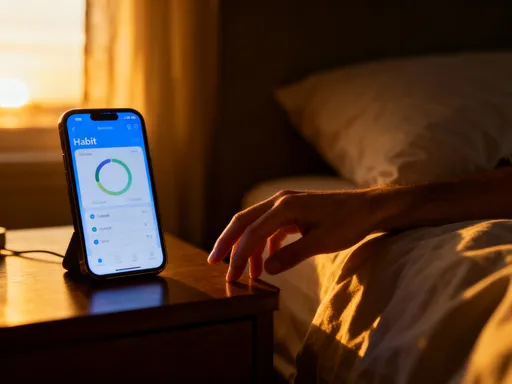
One of the reasons this worked for me is that it didn’t ask for more time—just better use of the time I already had. I didn’t need to carve out a special 'brain training' hour. Instead, I stacked it onto habits I already had. Five minutes while my coffee brews. Two minutes while waiting for the microwave. Three more before I turn off the light at night. It became as automatic as brushing my teeth. The app even sends a gentle reminder—no alarm, no flashing badge—just a soft chime that feels like a friendly nudge, not a demand.
That low friction made all the difference. Other apps failed because they felt like chores. This one felt like a gift to myself. And because it was so short, I never felt guilty skipping it—but I almost never did. There was a rhythm to it, a sense of continuity. Some days I did better than others, but the app didn’t punish me. It just said, 'Welcome back. Ready when you are.' That consistency, not perfection, was the key. I didn’t have to be 'on' every day. I just had to show up. And over time, those tiny moments added up to a big shift. I wasn’t just training my brain—I was rebuilding a habit of care, of showing up for myself in small, meaningful ways.
Beyond Speed: Gaining Mental Clarity and Confidence
The faster reactions were just the beginning. What followed was something deeper: mental clarity. I started making decisions with less hesitation. At work, I volunteered for projects I would’ve avoided before. In conversations, I spoke with more certainty. I wasn’t more knowledgeable—I was more confident in accessing what I already knew. It’s like the fog had lifted. That constant background noise of doubt—'Did I say the right thing?' 'Should I have reacted differently?'—started to quiet down. I felt calmer, more grounded, even in stressful moments.
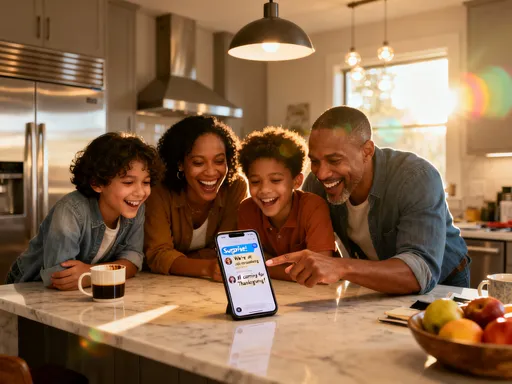
And that calmness rippled into my relationships. I listened better. I responded with more empathy. I wasn’t just waiting for my turn to speak—I was actually present. My husband said I seemed 'lighter,' like I wasn’t carrying so much mental weight. My kids said I laughed more. And it’s true—I had more mental space to enjoy them. I wasn’t multitasking through dinner or half-watching TV while scrolling. I was there. That sense of presence, of being fully engaged, became the real reward. It wasn’t about being faster for the sake of speed—it was about being more connected, more alive in my own life.
Why This Isn’t Just Another Hype—And Who It’s Really For
I’ll be honest: I was skeptical at first. How could five minutes a day make such a difference? But here’s what I’ve learned—small, consistent actions, especially when they’re low-effort and high-reward, have a way of compounding. This isn’t a magic fix. It won’t cure ADHD or replace therapy. But for anyone who’s ever felt mentally slow, distracted, or just a little out of step, it can be a game-changer. Parents juggling kids and work. Professionals managing back-to-back meetings. Students trying to stay focused. Even retirees wanting to stay sharp. No special skills, no tech expertise—just a willingness to show up for yourself in tiny, daily ways.
What makes this different from other apps is its focus on real-life function, not abstract scores. It doesn’t tell you your 'brain age' or compare you to strangers. It helps you respond faster in conversation, catch mistakes before they happen, and feel more in control. And because it’s so accessible—available on any smartphone, no subscription required beyond the free trial—it feels less like a luxury and more like a practical tool, like a good pair of walking shoes for your mind. It’s tech that serves you, not the other way around. In a world full of apps that demand attention, this one gives it back.
Feeling More Alive, One Second at a Time
Looking back, I realize this wasn’t just about reaction speed. It was about reclaiming my attention, my confidence, my sense of self. Those five minutes a day didn’t just train my brain—they reminded me that I matter. That my presence, my responses, my awareness—they all have value. In a world that moves fast, sometimes the most radical thing we can do is slow down enough to notice. And then, when it matters, respond—clearly, calmly, fully.
This app didn’t change my life in a single moment. It changed it in hundreds of small ones: catching a falling cup, understanding a fast-talking friend, making a decision without second-guessing. It taught me that technology, when designed with care and humanity, can be a quiet force for good. Not by overwhelming us with features, but by helping us show up—exactly as we are, just a little sharper, a little more awake. If you’ve ever felt like you’re missing moments, like you’re always one step behind, I encourage you to try it. Not for perfection. Not for speed records. But for the joy of feeling more connected, more capable, more *here*. Because life happens in real time. And now, thanks to a simple little app, I’m finally keeping up.