Tired of Staring at the Same Screen Every Day? This Online Learning Habit Changed Everything
Ever feel like you're stuck in a learning loop—watching the same videos, pausing, rewinding, forgetting? I did too. For months, I’d log into platforms hoping to grow, only to close the tab feeling drained and distracted. Then I tried something small: learning alone, on my own terms, without pressure or performance. It wasn’t about finishing courses fast—it was about finally feeling the growth. What changed wasn’t the technology, but how I used it. And honestly? It transformed more than my skills—it changed my confidence, my focus, even my mornings.
The Moment I Realized My Online Learning Was Going Nowhere
There was a time when I thought signing up for an online course was the same as actually learning. I’d see a beautiful ad—"Transform your career in 30 days!"—and click without thinking. I imagined myself confidently presenting new skills at work or finally launching that side project. But reality hit fast. Within a week, maybe two, the excitement faded. I’d open the course video, watch five minutes, get a text, check my email, remember I needed to order groceries, and close the tab. The next day? Same thing. And the next.
What hurt most wasn’t the wasted money. It was the guilt. I’d see others posting about their progress—"Just completed Module 3!"—with a screenshot and a proud emoji. I’d scroll past, heart sinking. Why couldn’t I do that? Was I lazy? Not disciplined enough? I started believing I wasn’t the kind of person who could learn online. I’d whisper to myself, "Maybe this just isn’t for me." But deep down, I knew I wanted to grow. I wanted to feel capable. I just didn’t know how to make learning stick—especially when life was already so full.
Looking back, I realize I wasn’t failing because I lacked willpower. I was failing because the system wasn’t built for someone like me. I wasn’t craving competition or public recognition. I didn’t want to be ranked on a leaderboard or tagged in a group chat about assignments. I just wanted to understand something new—quietly, gently, without pressure. But the platforms kept pushing social engagement like it was the only way to succeed. And so, I kept signing up, logging in, burning out, and quitting. Over and over.
Why Solo Learning Felt Wrong—Until It Didn’t
For a long time, I thought learning had to be social to be real. I believed that if I wasn’t sharing insights in a forum or commenting on someone else’s post, I wasn’t really participating. I even tried forcing myself into online communities, typing out thoughtful replies, waiting for likes or responses. But the truth? It drained me. Every notification felt like a tiny demand: "Pay attention. Contribute. Be seen." And the more I tried to engage, the less I actually learned.
I remember one evening, I was halfway through a lesson on organizing digital files—something I genuinely needed—when a pop-up appeared: "Join the discussion! 23 people are talking about this module." I clicked out of curiosity. An hour later, I was still scrolling, reading debates about productivity tools I’d never heard of, comparing my setup to others’, feeling quietly inadequate. When I finally returned to the lesson, I had to restart from the beginning. My focus was gone. And that’s when it hit me: all this noise wasn’t helping me learn. It was getting in the way.
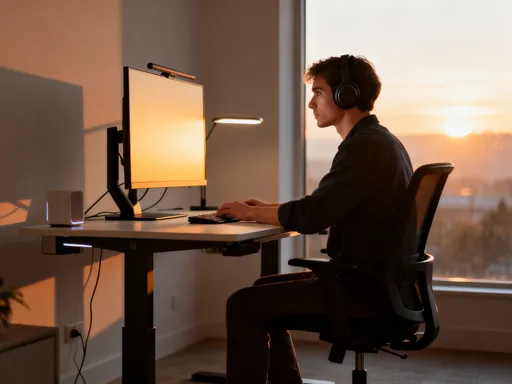
So I made a quiet decision: I would learn alone. No forums. No sharing. No public goals. Just me, my screen, and the material. At first, it felt strange—almost selfish. Wasn’t learning supposed to be collaborative? But then I noticed something: I was actually remembering things. I wasn’t rushing to finish just to post about it. I could pause, reflect, rewatch a section if I needed to. There was no one watching, no one judging. And that freedom changed everything. Learning stopped being a performance and started being a practice. It wasn’t about proving anything to anyone. It was about building something real, one quiet moment at a time.
How I Built My Own Quiet Learning Routine (No Willpower Needed)
I used to think I needed more discipline to learn online. Now I know I just needed better design. The turning point came when I stopped treating learning like a chore I had to force myself into and started treating it like a morning ritual—something as natural as making tea or stretching after waking up. I didn’t need willpower. I needed a routine that fit my life, not one that fought against it.
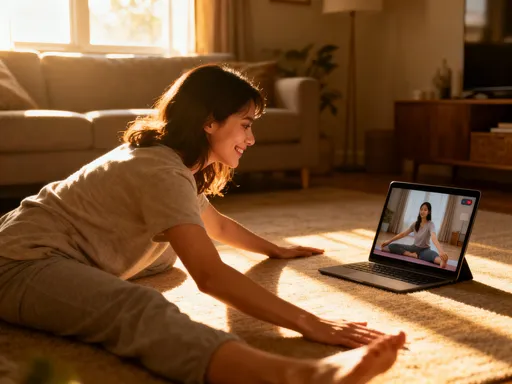
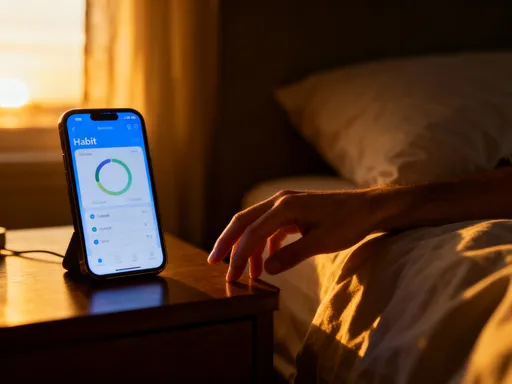
Here’s what worked: every morning, after I pour my tea, I sit in the same chair, open the same app, and set a timer for 25 minutes. That’s it. No multitasking. No phone nearby. Just one course, one lesson, one focus. I don’t aim to finish anything. I don’t track streaks or badges. I just show up. And over time, that small habit became non-negotiable—like brushing my teeth. It’s not about motivation. It’s about consistency. The tea is my cue. The timer is my boundary. The silence is my space.
What surprised me was how little effort it took once the structure was in place. I used to wait for the "right mood" to learn. Now I don’t wait. I just begin. And the more I showed up, the more my brain started to expect it. It’s like training a muscle—you don’t need to feel strong to lift the weight. You just need to lift it. Over time, the habit grew stronger than my excuses. Even on busy mornings, I’ll say to myself, "Just 25 minutes. Just one lesson." And almost always, I end up doing more. But even if I don’t, I’ve still kept the promise to myself. And that, more than any certificate, has built my confidence.
The Unexpected Emotional Payoff of Learning Alone
I didn’t expect learning in silence to change how I felt about myself. But it did. There’s a kind of quiet pride that comes from finishing a lesson and not telling a soul. It’s not about secrecy—it’s about integrity. I realized I had been tying my sense of accomplishment to external validation. If no one saw it, did it count? But when I started learning alone, I had to answer that question honestly. And slowly, I began to trust myself.
One morning, I completed a module on time management—something I’d struggled with for years. In the past, I would’ve immediately texted a friend or posted about it online. This time, I just closed the app, took a breath, and said quietly, "I did that." And it felt… solid. Real. Because I knew it wasn’t for show. I hadn’t done it to impress anyone. I’d done it because I wanted to grow. That small moment of self-recognition was more powerful than any like or comment could ever be.
Over time, this quiet confidence started to spill into other areas of my life. I became more patient with myself when I made mistakes. I stopped comparing my progress to others’. I began to see learning not as a race, but as a journey—one I was walking at my own pace. And the more I trusted myself, the more I believed I could handle new challenges. It wasn’t just about the skills I was gaining. It was about the mindset I was building: one of quiet resilience, self-respect, and inner calm.
Picking the Right Platform Was Half the Battle
Not all online learning platforms support this kind of quiet, personal growth. Some are built like social networks—full of notifications, badges, and public profiles. I tried a few early on, and they pulled me right back into that cycle of comparison and pressure. I’d see someone with "100 days streak" and instantly feel behind. Or I’d get a message: "You’re falling behind your peers!" As if learning was a competition with a deadline.
What I needed was different. I wanted a platform that felt calm, clean, and private. Something that didn’t shout for my attention but quietly held space for learning. After some trial and error, I found one that let me download lessons for offline use—so I could learn even when the Wi-Fi was spotty. It had a simple progress bar, no gamification, no leaderboards. I could track my own pace without anyone else seeing it. And most importantly, it didn’t push me to share or engage socially. The design was minimal, the interface intuitive. The technology didn’t distract me. It disappeared.
That made all the difference. When the tool gets out of the way, the learning can finally begin. I wasn’t fighting a cluttered screen or a flood of notifications. I wasn’t measuring myself against others. I was just focusing on the material, one step at a time. The platform didn’t promise transformation. It just made it possible. And that’s what I needed—not hype, not pressure, but space. Space to think. Space to grow. Space to be me.
From Passive Watching to Real Doing—My Simple System
For years, I thought watching a video was the same as learning. I’d sit through a 20-minute lesson, feel like I understood it, and then… do nothing. A week later, I couldn’t remember a single takeaway. I was collecting knowledge like souvenirs—interesting, but not useful. The real shift came when I stopped being a passive consumer and started being an active participant. I created a simple rule: one-in, one-out.
Here’s how it works: after every lesson, I pause and write down one thing I learned—one insight, one idea, one tip. Just one. Then, before the day ends, I do one small action based on that insight. Maybe it’s organizing a folder on my computer. Maybe it’s writing a short email using a new phrase I learned. Maybe it’s trying a breathing technique before bed. It doesn’t have to be big. It just has to be real.
This tiny habit changed everything. Suddenly, learning wasn’t just happening in my head. It was showing up in my life. I started seeing results—small at first, then bigger. My digital files became easier to find. My communication became clearer. My mind felt more organized. And because I was actually using what I learned, I remembered it. The cycle of learning-doing-seeing results built momentum. I wasn’t just gaining knowledge. I was building competence. And that made me want to keep going.
How This Small Habit Ripple-Changed My Life
I didn’t start this journey thinking it would change more than my skills. But it did. The quiet focus I cultivated in those morning learning sessions began to show up in other parts of my day. I found myself more present when cooking dinner—actually tasting each ingredient, not just rushing to get it done. I listened more deeply in conversations, not just waiting for my turn to speak. Even folding laundry became a moment of calm instead of a chore I resented.
There’s a rhythm to this kind of growth—one that doesn’t announce itself with fanfare. It doesn’t come from grand gestures or overnight transformations. It comes from showing up, day after day, for the small things. It comes from trusting that progress doesn’t have to be loud to be real. I used to think growth meant being seen—getting promoted, winning awards, being recognized. Now I know it often happens in silence. In the quiet click of a play button. In the pause before you try something new. In the moment you choose yourself, not because it’s easy, but because it matters.
Today, I still learn alone. I still pour my tea, set my timer, and open my course. But now, when I close the app, I carry more than knowledge. I carry confidence. Clarity. Calm. I carry the quiet certainty that I am growing—not for anyone else, but for me. And that, more than anything, has changed everything.